

Ever thought your workplace could be fairer and more supportive? Starting a union might change everything.
Union organizing is a strong way for workers to tackle problems together. When workers unite, they can ask for better pay, safer work, and more job security.
To start a union, you need a plan, to know the law, and to work well with your coworkers. This lets workers improve their work place and fight for real changes.
Setting up a union legally takes a few big steps. From talking to coworkers to getting official approval. Workers can use this to make big improvements for everyone.
Key Takeaways
- Collective action can dramatically improve workplace conditions
- Union formation requires strategic planning and collaboration
- Legal protections support workers’ rights to organize
- Unions provide a structured approach to addressing workplace issues
- Employee solidarity is the foundation of successful union efforts
Understanding Unions and Their Purpose
Labor unions help protect workers’ rights and make workplaces better in the United States. They work together to get fair pay, safe places to work, and job security. This is all through the labor union process.
Workers join unions to have a stronger voice. They work together to talk to bosses better. They use steps like organizing and bargaining to solve work problems.
What is a Labor Union?
A labor union is a group of workers working together. They look out for each other’s jobs. They talk to bosses about important things like:
- Wage rates and compensation
- Working conditions
- Employee benefits
- Job security protections
Benefits of Union Membership
Being in a union has big benefits for workers. It helps them get better jobs and work conditions. Union members get help through working together.
| Union Benefit | Impact on Workers |
|---|---|
| Higher Wages | Average 10-20% increase |
| Healthcare Coverage | More complete plans |
| Job Security | More protection from being fired unfairly |
| Workplace Safety | Stronger rules for safety |
Common Misconceptions About Unions
Many people get unions wrong. Unions are not against bosses. They are places where everyone works together for a fair workplace.
- Unions help both workers and businesses
- They make sure everyone talks openly
- Being in a union can make work better for everyone
Assessing the Need for a Union
Starting to organize at work means understanding the problems employees face. Every good labor rights campaign starts with real talks about work conditions. Workers need to decide if joining a union will fix big issues and make work better.
Finding out what’s wrong at work needs a smart plan. Employees should watch for ongoing issues that affect their daily tasks.
Key Areas of Workplace Concern
- Wage stagnation
- Inconsistent scheduling
- Limited career advancement opportunities
- Inadequate health and safety protections
- Lack of job security
Gathering Employee Feedback
Good organizing needs feedback from everyone. Anonymous surveys and casual talks can show common problems that might need a union.
| Feedback Method | Effectiveness | Anonymity Level |
|---|---|---|
| Anonymous Online Survey | High | Complete |
| Small Group Discussions | Medium | Partial |
| One-on-One Conversations | Low | Limited |
The Role of Job Security and Benefits
Job security is a big reason workers think about unions. Working together can help negotiate better pay and protect rights.
Workers should keep records of work problems, gather proof, and agree on a plan before starting a union. Knowing your work’s specific issues is key to a strong labor rights plan.
Researching Union Options
Finding the right union takes careful research and planning. Knowing about different unions helps workers make smart choices for their jobs.
The U.S. has many types of unions for various jobs and needs. A good guide to joining a union shows you the different kinds and what they offer.
Types of Unions in the U.S.
- Trade Unions: Help workers in specific skilled trades or crafts
- Industrial Unions: Cover workers in whole industries, no matter the job
- Public Sector Unions: Help government and city workers
- Professional Unions: Focus on groups like teachers or nurses
Locating Existing Unions in Your Industry
Finding the right union needs smart research. Union organizers help workers find the right group. Here are some ways to do it:
- Ask professional associations for help
- Look at labor directories for your field
- Talk to people with experience
- Go to labor events and workshops
Evaluating Union Strength and Reputation
When picking a union, look at important things like how many members it has. Also, check its negotiation history and support for members. A union’s past shows if it’s good at protecting workers.
Doing thorough research helps workers pick a union that fits their job goals and needs.
Building a Union Organizing Committee
Starting a union movement needs careful planning and a good team. The organizing committee is key. It speaks for all employees, no matter their job or background.
It’s important to have a strong organizing committee. They will lead the union effort. They make sure everyone’s voice is heard.
Selecting Committee Members
Picking the right people for the committee is very important. Look for those who are:
- Respected by their coworkers
- Good at talking and listening
- Want to make work better
- Stay calm when things get tough
Defining Roles and Responsibilities
A good committee works well together. They need clear roles. Here are some important ones:
| Role | Key Responsibilities |
|---|---|
| Lead Organizer | Plans and organizes everything |
| Communications Coordinator | Handles messages inside and outside the company |
| Legal Liaison | Knows about legal rights and steps |
Importance of Diverse Representation
A strong union needs comprehensive representation. The best committees have:
- People from different departments
- Various job roles
- Workers from different shifts
- Diverse backgrounds and experiences
With a committee that truly represents everyone, you’ll have a stronger union. It can tackle work issues and bring about real change.
Securing Support from Co-Workers
Getting support for union representation is key to making big changes at work. You need to talk and connect with your coworkers well. First, you must understand and tackle problems everyone faces at work.
Spreading the word about union steps involves many ways that speak to what workers care about.
Strategic Awareness Building
- Have one-on-one talks about work issues
- Share your own work struggles
- Give facts about what unions can do
- Pass out helpful papers quietly
Organizing Informal Meetings
Make places where people can talk openly about work worries. These meetings help build trust and show the power of working together.
- Pick places that are neutral and comfy
- Make the vibe welcoming and safe
- Really listen to what others say
- Give examples of unions making a difference
Addressing Possible Concerns
Think ahead and be ready for common questions about unions. Being open and honest helps win over doubts and builds real support for working together.
- Face and talk about possible risks
- Give straight, true info
- Show you’re all in this together
- Highlight how decisions are made together
Developing a Union Campaign
Starting a union movement needs careful planning and clear talk. A good union drive at work takes time and thought. Workers looking for help must make a strong plan that speaks to their coworkers and tackles work problems.
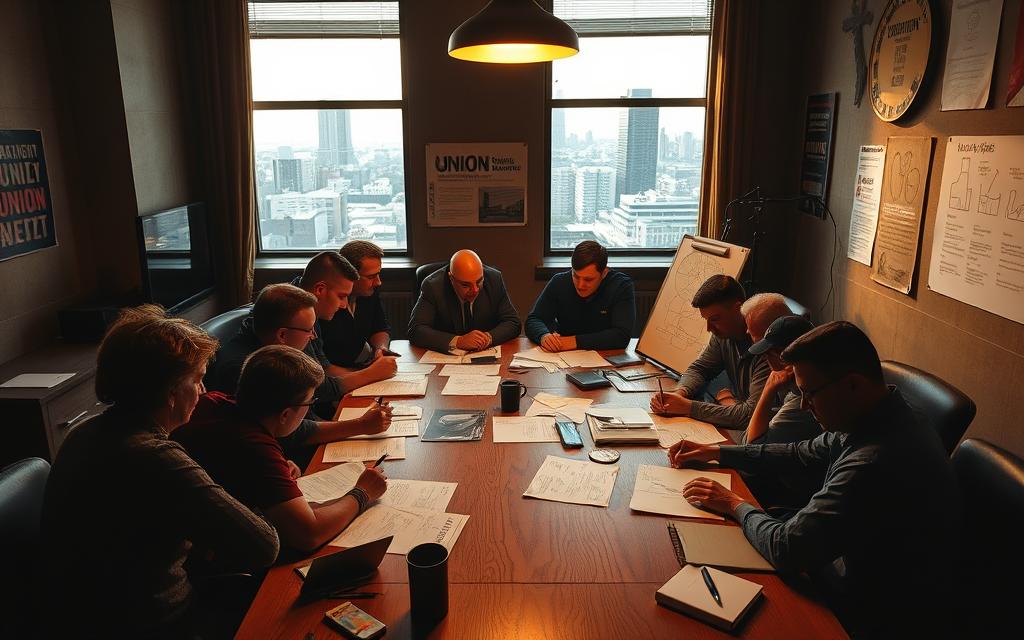
A strong message is key for any union effort. Your campaign should talk about real work issues and how things could get better for everyone.
Crafting a Clear Message
A good union message should:
- Point out specific work problems
- Show how things could get better
- Link personal stories to group goals
- Bring hope and the urge to act together
Creative Outreach Methods
Using new ways to talk can make your union drive stronger. Think about these ideas:
- Using digital stories
- Hosting work info sessions
- Being active on social media
- Attending community events
Setting Goals and Timelines
| Campaign Phase | Duration | Key Objectives |
|---|---|---|
| Initial Planning | 1-2 months | Make core messages |
| Awareness Building | 2-3 months | Get the workforce involved |
| Mobilization | 3-4 months | Get most people on board |
Good planning turns personal issues into group strength. By carefully planning your union campaign, you make a plan for real change at work.
Legal Framework for Forming a Union
When you want to start a union, knowing the law is key. Workers have strong laws to protect their right to work together. These laws help them have a voice in the workplace.
The National Labor Relations Act (NLRA) helps workers a lot. It lets them work together to make their jobs better. This law keeps them safe from getting in trouble for trying to improve their work life.
Understanding Workers’ Legal Protections
Workers have special rights when they think about starting a union. These rights are important for the whole process:
- Right to talk about starting a union with coworkers
- Protection from being scared or bullied by the boss
- Freedom to share union info
- Ability to meet and talk about work problems
NLRB Union Petition Process
The National Labor Relations Board (NLRB) has a clear way for workers to ask for union help. If enough coworkers support it, they can file a petition with the NLRB.
Confidentiality and Strategic Planning
Keeping things secret at the start is very important. Workers should be careful about who they tell. This helps avoid trouble or unfair treatment at work.
Knowing these laws helps workers make smart choices. They can work together for better jobs and work places.
Conducting a Union Election
The union election process is very important. It lets workers decide if they want a union. This choice affects their work life a lot.
To win a union election, you need a good plan. You must know how to file with the NLRB. This makes sure everyone’s voice is heard.
Preparing for the Election Process
Getting ready for the election is key. Here’s what you need to do:
- Get signed cards from workers who want a union
- Write down what’s wrong at work and what could be better
- Learn the laws about unions
- Find out who can vote
Ensuring an Objective Election
The National Labor Relations Board (NLRB) helps keep the election fair. They make sure workers can vote without being scared.
Supporting Voter Education
It’s important to teach workers about voting. They should know:
- What their rights are during the vote
- How unionizing might change things
- How to vote and keep their vote secret
- The good things that come from having a union
Knowing these things helps workers make smart choices for their jobs.
Negotiating a Collective Bargaining Agreement
After forming a labor union, the next step is negotiating a collective bargaining agreement. This lets workers get real protections at work. They do this through smart union steps.
When negotiating, being ready and united is key. Union members need a solid plan that tackles important work issues.
Key Components of a Collective Bargaining Agreement
A good agreement has several important parts:
- Wage structures and compensation scales
- Healthcare and retirement benefits
- Working conditions and safety protocols
- Grievance resolution mechanisms
- Job security provisions
Preparing for Negotiation Meetings
Good prep means listening to union members and studying industry standards. Knowing what unions offer helps in negotiations.
| Negotiation Preparation Steps | Key Actions |
|---|---|
| Member Survey | Collect workplace concerns and priorities |
| Research | Analyze comparable industry agreements |
| Strategy Development | Prioritize negotiation objectives |
Building a Negotiation Strategy
Good negotiations need strategic planning, clear talk, and unity. The bargaining team must aim for real gains for members.
With professionalism and readiness, unions can fight for worker rights. They can make lasting agreements at work.
Communicating with Union Members

Good communication is key for unions to succeed. It keeps members informed and involved. This builds trust and unity in the workplace.
Keeping Members Informed
It’s important to keep in touch with union members. Digital tools are great for sharing news and keeping people interested:
- Use secure online sites for talking
- Send out monthly digital newsletters
- Make sure info is easy to see on phones
- Use secret messages for private talks
Creating Feedback Channels
It’s vital to listen to what members say. Good ways to do this include:
- Online surveys that keep things private
- Virtual meetings where everyone can join
- Special email for talking to the union
- Boxes for suggestions
Transparency in Union Activities
Being open and honest is important. It makes members trust the union more. Being clear about what you do helps everyone work together better.
| Communication Strategy | Purpose |
|---|---|
| Regular Progress Reports | Update members on negotiation status |
| Financial Disclosure | Share union resource allocation |
| Decision-Making Insights | Explain rationale behind key decisions |
By talking clearly and often, unions can build strong, united groups. These groups can make big changes at work.
Overcoming Challenges and Opposition
Starting a union drive at work can face big challenges from employers. Knowing these obstacles and planning smart can help workers keep their rights. It also helps them deal with tricky rules from employers.
When workers try to organize a union, bosses often push back. Knowing these challenges helps workers get ready with strong plans.
Identifying Possible Obstacles
- Management intimidation tactics
- Spread of misinformation about unions
- Potential workplace retaliation
- Internal disagreements among workers
Strategies for Dealing with Management Pushback
Winning a union drive needs careful planning and staying strong. There are laws to protect workers from unfair practices during organizing.
| Challenge | Recommended Strategy |
|---|---|
| Anti-union propaganda | Provide factual counter-information |
| Workplace intimidation | Document interactions, seek legal counsel |
| Divide and conquer tactics | Maintain strong communication network |
Maintaining Unity Among Members
Being united is the strongest tool against boss resistance. Open communication, mutual support, and shared goals keep workers strong during tough times.
- Regular team meetings
- Transparent decision-making processes
- Collective problem-solving approaches
- Continuous member education
Workers who know their rights and stick together can beat workplace opposition. This helps them form a union.
Ensuring Long-Term Success of the Union
Building a strong union takes hard work and smart planning. Getting help with labor organizing is key to keeping your union strong. The role of a union organizer is not just at the start. It’s about growing and changing over time.

Good unions keep up with changes in the workplace. They use strong strategies to protect workers in new situations.
Continuous Education and Training
Learning is essential for a union to do well. Important areas to focus on include:
- Understanding current labor laws
- Developing advanced negotiation skills
- Learning emerging workplace technologies
- Analyzing industry-specific trends
Building Relationships with Other Unions
Networking is very important. It helps unions get support and share resources. Working together can help protect workers in many fields.
| Collaboration Strategy | Potential Benefits |
|---|---|
| Cross-Industry Workshops | Knowledge Sharing |
| Joint Negotiation Training | Enhanced Bargaining Skills |
| Shared Legal Resources | Comprehensive Legal Support |
Adapting to Changing Workplace Dynamics
Modern unions need to be flexible and forward-thinking. They must get ready for new tech, understand new work ways, and solve new problems.
- Embrace digital communication tools
- Create flexible membership engagement strategies
- Develop responsive negotiation approaches
Celebrating Milestones and Achievements
Starting a union is a big step towards power at work. It takes hard work, smart planning, and working together. It’s key to celebrate wins to keep everyone excited and motivated.
The toolkit for unions says it’s vital to celebrate together. When we mark our wins, it makes everyone feel good. It shows the real value of working together.
Recognizing Committee and Members’ Efforts
It’s important to say thank you to make the union stronger. Here are some ways to do it:
- Create an achievement wall to show off member work
- Have monthly thanks for everyone’s help
- Share stories of success in emails and meetings
- Give special awards for the best organizers
Importance of Positive Reinforcement
Being positive is key to keeping the union going. Thanking people for their hard work shows we value them. It keeps everyone’s spirits high and their commitment strong.
Planning a Union Launch Celebration
A big launch party can bring everyone together. It’s a chance to celebrate and look forward. Here’s what to include:
- Invite everyone who helped
- Show off what we’ve done and what’s next
- Make it a fun, welcoming event
- Get everyone excited for what’s coming
Every victory, big or small, is worth celebrating. By always celebrating, unions can grow stronger and more united.
Resources for Union Formation
Starting a union journey needs good resources and support. Workers looking to organize can find many tools to help. National groups and online platforms offer detailed guides for organizing.
Getting legal help is key for workers. Groups like the AFL-CIO and National Labor Relations Board help a lot. They offer webinars, legal advice, and step-by-step guides.
Books and online sites are great for learning. “No Shortcuts: Organizing for Power” by Jane McAlevey is a good read. Sites like Labor Notes share useful strategies and ideas.
Today, digital tools make organizing easier. There are secure chats, social media groups, and apps for organizing. These tools help workers connect and plan for change.


